

Playing Time: Baseball, Memory, and the Video Games That Outlast Us
UNBOXED with Doug Glanville

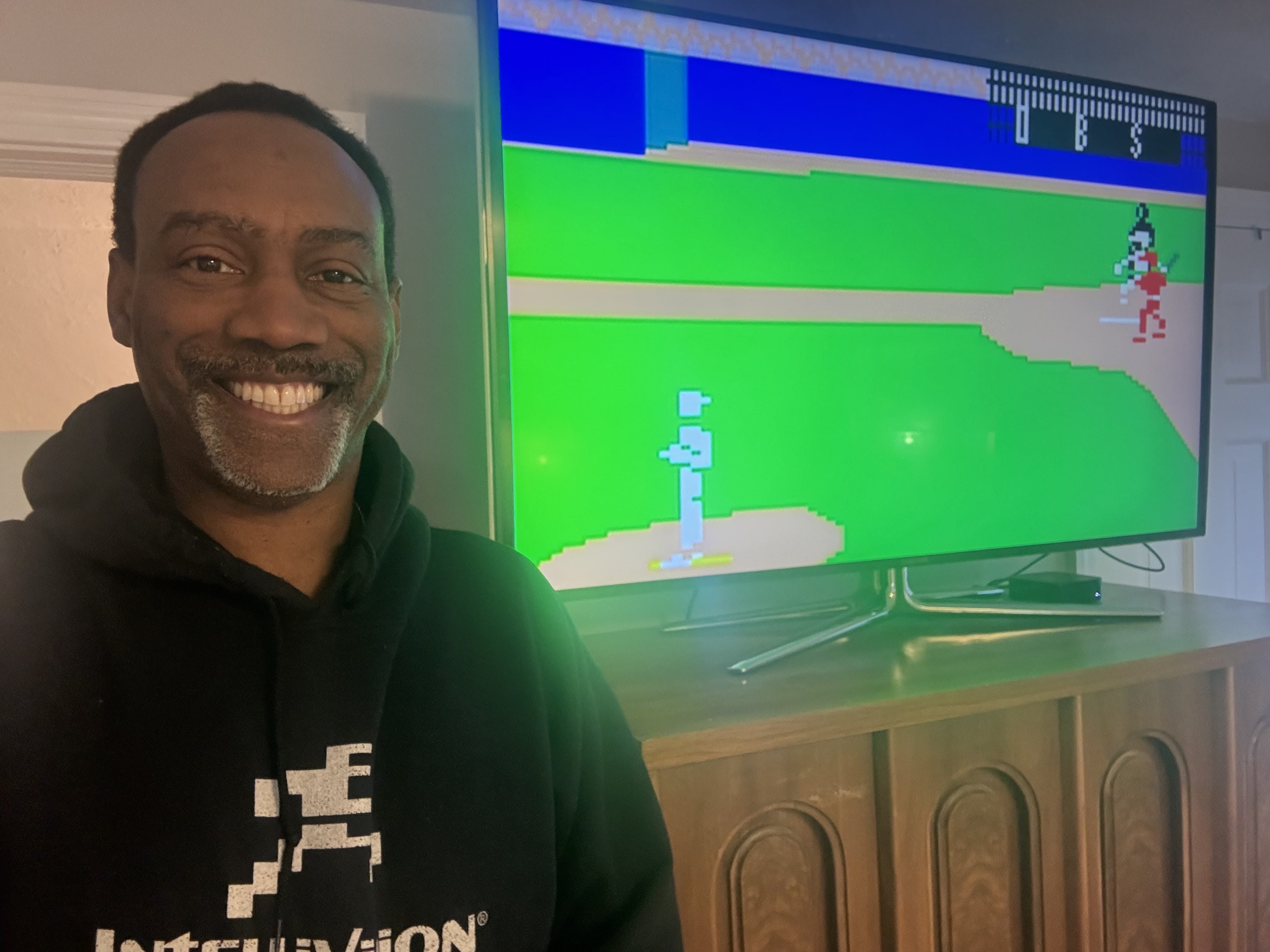
As the off-season for Major League Baseball players comes to a close, I am reminded of how I spent those final days as both a fan and as a player. One thread that connects those different eras is the development and evolution of baseball video games.
My parents were early adopters into video games with a purchase of Pong, a simple back-and-forth version of tennis. The game system was firmly planted in their bedroom, most likely to limit game time, which I understand more than ever now as a parent of four.
Pong led to the next step in gaming, which I mostly experienced by watching friends dive into the world of Atari. While I enjoyed it, my attention was always drawn to those cool Intellivision commercials. Those early console wars between Atari and Intellivision would be decided in my mind by one criterion: who made the best baseball game. I saw what Intellivision was doing with sports, creating games good enough to be licensed by the leagues. I was sold.
Atari’s baseball game featured just three defensive players, all tethered together. Move right, and they all moved right in lockstep. Intellivision, on the other hand, offered a full field of players. Outfielders, infielders, a catcher and a pitcher. There was even the voice of an umpire making the call. In its licensed MLB game, you had to press the button for the correct position to make a play. You worked the corners while pitching, timed your swing, and had to run the bases wisely to be successful. (Ironically, in 2024, Atari acquired Intellivision, officially ending the early ‘80s console wars and leaving this former Intellivision snob conflicted.)
I have a big brother, which meant these baseball games became another arena where I might actually beat him at something. Inside that virtual world, size and strength did not matter. It was quick fingers and practice. Eventually, I notched a few victories, briefly upending the natural order of brotherhood and birth order, if only for a blip.
Intellivision continued pushing the envelope by adding a voice simulator called the Intellivoice. Soon after came a baseball game called World Series Major League Baseball. It featured revolutionary camera angles, an announcer, and their signature screaming fans. Pitchers tired. Organists blasted rally songs. At the time, there was nothing like it on a home system. Arcade graphics were still superior, but Intellivision closed the gap and created a statistics-based model, truly revolutionary for the time.
Although I was still playing in my analog Strat-O-Matic baseball leagues and rooting hard for the Phillies, I became a fan of the players in that Intellivoice baseball game—players whose last names belonged to the people who created the game itself, a group known within the gaming industry as the Blue Sky Rangers. The team rosters within the game included their last names paired with fictitious first names like Duke Daglow, Tatum Ettinger, Smokin’ Breen, and Rocky Tran. When I later learned this was a deliberate way to honor the programmers and engineers behind the game, it deepened my love for the game. I also truly appreciated that some of the players had darker faces. I saw myself in the game.
As consoles battled for dominance in the early ‘80’s, personal computers began to flourish and games grew more advanced, opening new doors for baseball gaming. On my Apple II, I built a library of PC baseball games that included Computer Baseball, Hardball!, Star League Baseball, MicroLeague Baseball, Tony La Russa Baseball, and others. The games were becoming more realistic, and more complicated. Just the way I liked it.